
Capital Improvement Program

Investing in Reliable, Sustainable Water, Wastewater, and Recycled Water Infrastructure
The South Tahoe Public Utility District’s Capital Improvement Program (CIP) represents long-term investment in critical water, wastewater, recycled water, and export system infrastructure.
The District plans, designs, and delivers projects that support:
- Reliable utility service
- Public health and safety
- Environmental protection
- Emergency preparedness
- Long-term infrastructure sustainability
The current ten-year CIP includes projects focused on replacing aging infrastructure, improving system reliability, and supporting the future needs of our community.
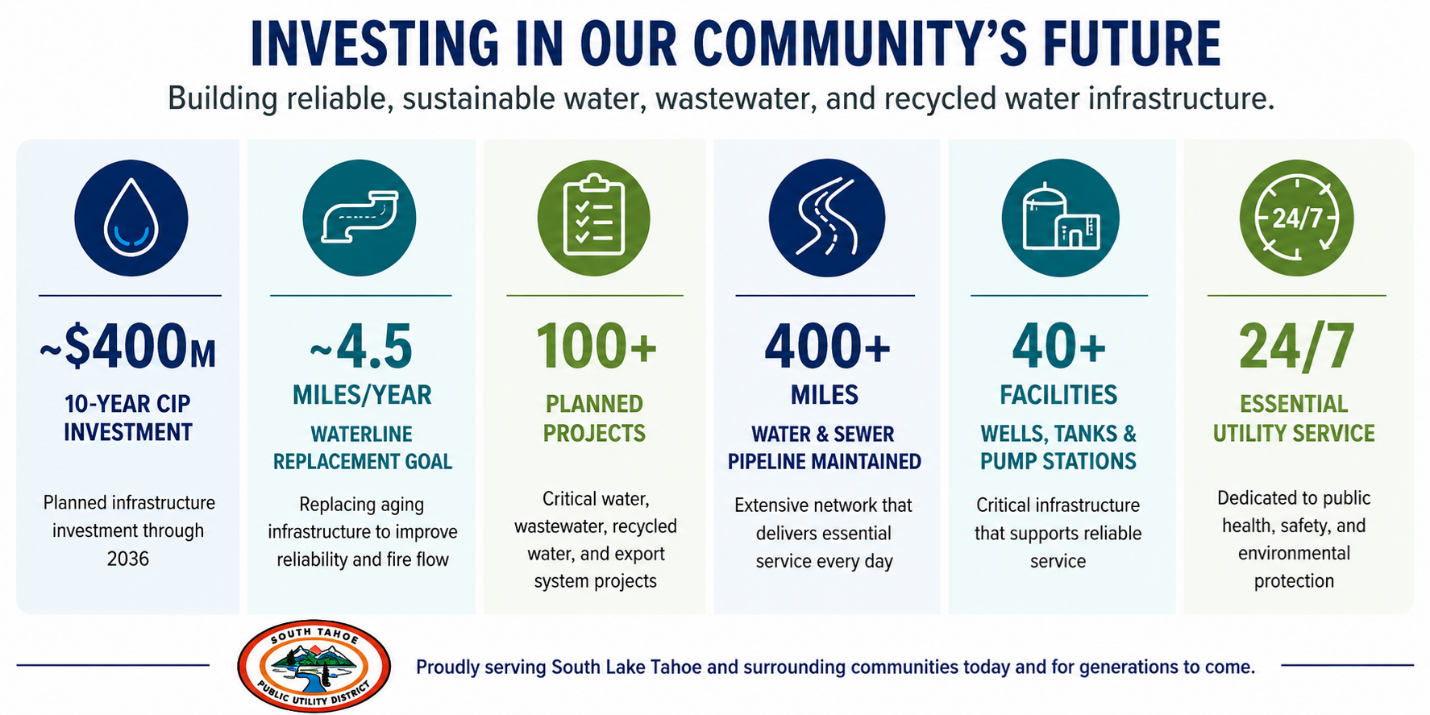
What is a Capital Improvement Program?
A Capital Improvement Program (CIP) is a long-range planning tool used to identify, prioritize, and schedule major infrastructure investment over multiple years.
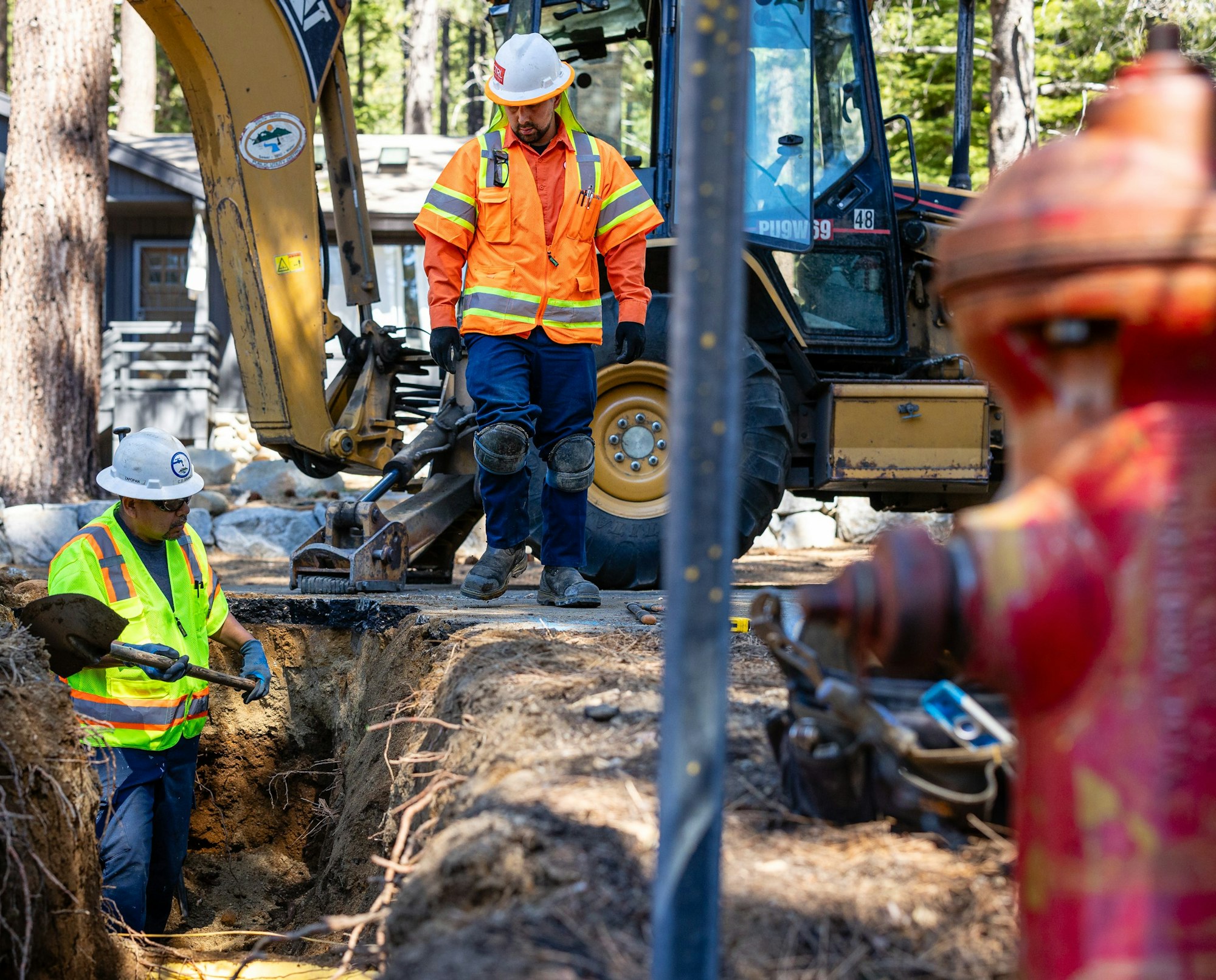
Projects included in the CIP typically involve:
- Waterline and sewer pipeline replacement
- Pump station rehabilitation
- Well and storage improvements
- Treatment facility upgrades
- Recycled water and export system infrastructure
- Technology and asset management improvements
The CIP is updated annually and coordinated with the District’s budget and long-term financial planning efforts.
District Infrastructure Systems
The South Tahoe Public Utility District owns and maintains critical water, wastewater, recycled water, and export system infrastructure serving the South Lake Tahoe community.

District infrastructure includes:
- 253 miles of water distribution pipelines
- 11 active drinking water wells
- 19 water storage tanks
- 331 miles of sewer collection pipelines
- 39 sewer pump stations
- Wastewater Treatment Plant
- 26 miles of recycled water export pipeline
- Recycled water infrastructure, including a reservoir, irrigation ditches, and irrigation
Maintaining and reinvesting in this infrastructure is essential to supporting reliable utility service, protecting Lake Tahoe and the environment, and ensuring long-term system sustainability for future generations.
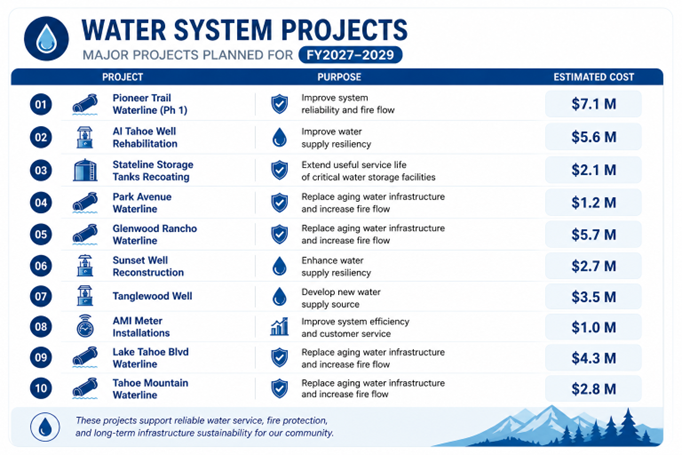
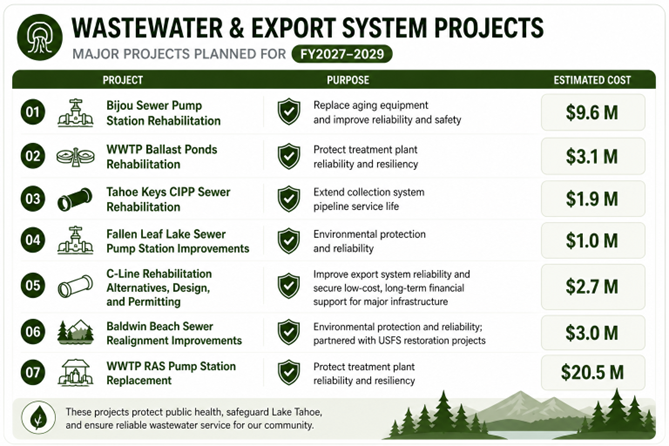
Major Projects Planned for the Next 3-5 Years
Upcoming projects focus on replacing aging infrastructure, improving reliability, supporting regulatory compliance, and maintaining sustainable utility service for the community.
| Much of the District’s infrastructure was originally constructed decades ago and requires ongoing reinvestment to maintain reliability, regulatory compliance, environmental protection, and emergency preparedness. The CIP helps ensure infrastructure continues to serve the community safely and reliably. |
|---|
Explore Projects Using the Interactive CIP StoryMap
The District is developing an interactive GIS-based StoryMap to provide the community with a more accessible way to explore current and upcoming infrastructure projects.
The StoryMap allows users to:
- View project locations on an interactive map
- Learn about project purpose and benefits
- See planned construction timelines
- Explore water and wastewater infrastructure investments
- Access project updates and supporting information
This tool is intended to improve transparency and help the community better understand how infrastructure investments support reliable utility service and environmental stewardship.
Explore the CIP StoryMap
How Projects Are Prioritized
The District evaluates capital projects using multiple considerations, including
- Regulatory compliance
- Public health and safety
- Infrastructure reliability
- Environmental protection
- Asset condition and age
- Operational impacts
- Coordination opportunities with partner agencies
- Long-term financial planning and fiscal responsibility
Projects are reviewed collaboratively among Engineering, Operations, Finance, and executive leadership teams. The District works to coordinate projects and construction schedules to minimize impacts to the community whenever possible.
Innovation & Asset Management
The District continues to invest in technology and data-driven asset management tools to improve infrastructure planning and operational efficiency.
Current initiatives include:
- Smarter asset tracking: Upgrading to a new system that helps us better track, maintain, and plan repairs for pipes, pumps, and facilities.
- Improved mapping: Enhancing our digital maps so we have a more accurate, real-time view of underground infrastructure.
- Better construction oversight: Using software to manage projects more efficiently, keeping them on schedule and within budget.
- Advanced sewer analysis: Studying how water moves through the sewer system to identify and reduce excess water from storms or leaks.
- Proactive inspections: Using data and camera technology to inspect sewer lines and fix issues before they become bigger problems.
- Real-time monitoring: Tracking wells and pump stations remotely so we can quickly respond to changes or potential issues.
These tools support more proactive infrastructure planning and long-term sustainability.
Coordination with Regional & Community Partners
Many CIP projects are coordinated with local and regional partners to reduce community impacts, improve efficiency, and align infrastructure investments.
Examples include City of Lake Tahoe roadway projects, El Dorado County improvements, utility coordination partnerships, Tahoe Basin environmental initiatives, and fuel reduction and resiliency coordination efforts.
This coordination helps maximize public investment while minimizing disruptions to the community.
Rate Increases
The Capital Improvement Program relies on small but continuous annual rate increases to fund the projects on the plan. By continuing to invest in our system, we will minimize long-term costs, protect the environment, and ensure long-term, quality service.
Visit our Rate Changes Page to learn about the rate study.
